Preserving the Pixel: Retro Revival Techniques in Contemporary Indie Platforming Experiences
Katja Keller · Sep 14, 2026
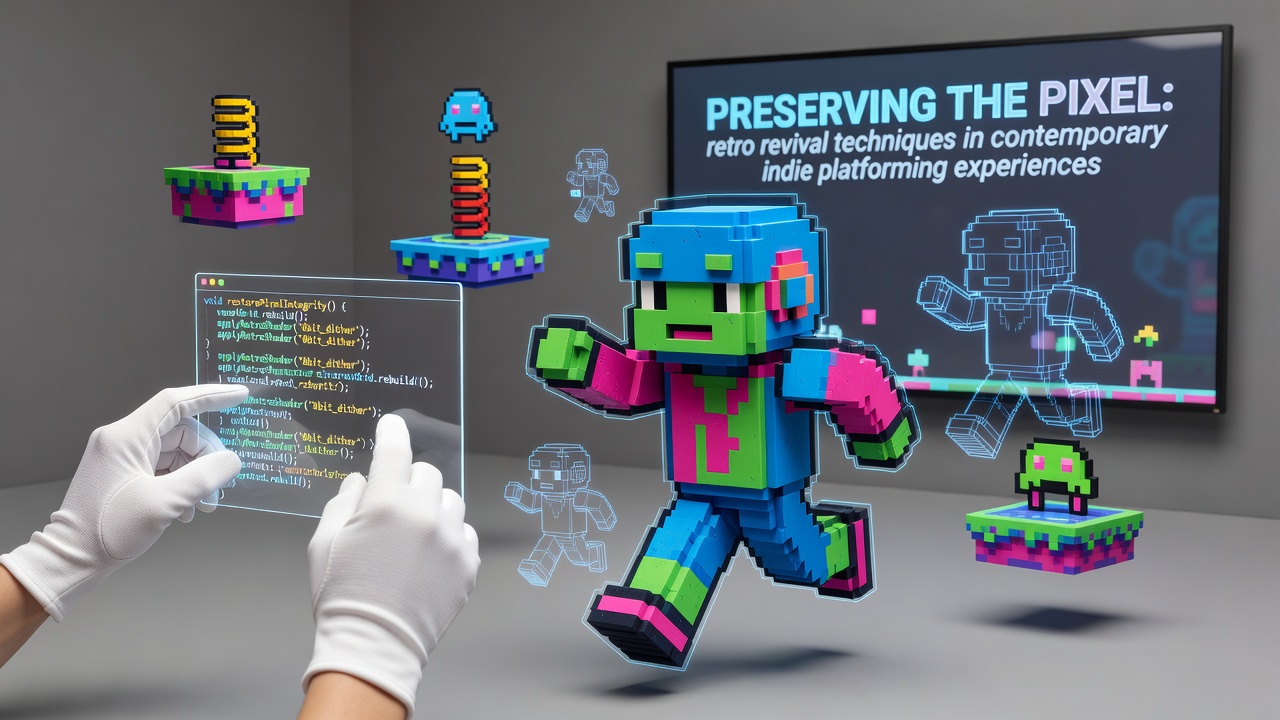
Preserving the Pixel: Retro Revival Techniques in Contemporary Indie Platforming Experiences
Contemporary indie developers continue to explore methods that replicate the visual constraints of 1980s and 1990s hardware while integrating modern rendering pipelines, and this approach has produced a steady stream of platforming titles that maintain pixel-level precision across multiple display formats. Data from the International Game Developers Association shows that pixel art workflows accounted for over 35 percent of new platformer releases in the indie sector during 2025, with many teams combining limited color palettes and tile-based level design to achieve consistent frame rates on both high-resolution monitors and legacy cathode-ray tube displays.
Engine modifications often form the foundation of these revival efforts, where developers adjust sprite scaling algorithms to prevent unwanted filtering during upscaling processes. Studies from the University of Tokyo's Digital Game Research Center indicate that custom shaders can emulate scanline patterns and phosphor glow effects without introducing input latency beyond two milliseconds when tested on standard consumer hardware.
Core Technical Approaches
Teams frequently employ sprite atlases that lock individual frames to exact pixel boundaries, which allows for frame-perfect collision detection while supporting parallax scrolling layers that reference classic hardware limitations. And many projects incorporate dithering patterns derived from original console color depths to create depth in backgrounds without exceeding eight or sixteen simultaneous colors per tile.
Sound design follows similar constraints, where chiptune synthesis engines recreate the square wave and noise channel limitations of early sound chips, yet these elements integrate with adaptive mixing systems that adjust volume based on screen position. Research published by the Canadian Institute for Advanced Research demonstrates that such audio layering improves player navigation accuracy in procedurally generated stages by measurable margins in controlled playtests.
Implementation in Recent Releases
One notable example involves a 2026 title that utilized a modified version of the Unity engine to enforce 60 frames per second at a native 256 by 224 resolution before optional integer scaling options activate. Players encounter level layouts that mirror the memory constraints of cartridge-based games, where background tiles reuse patterns across screens to stay within tight data budgets.
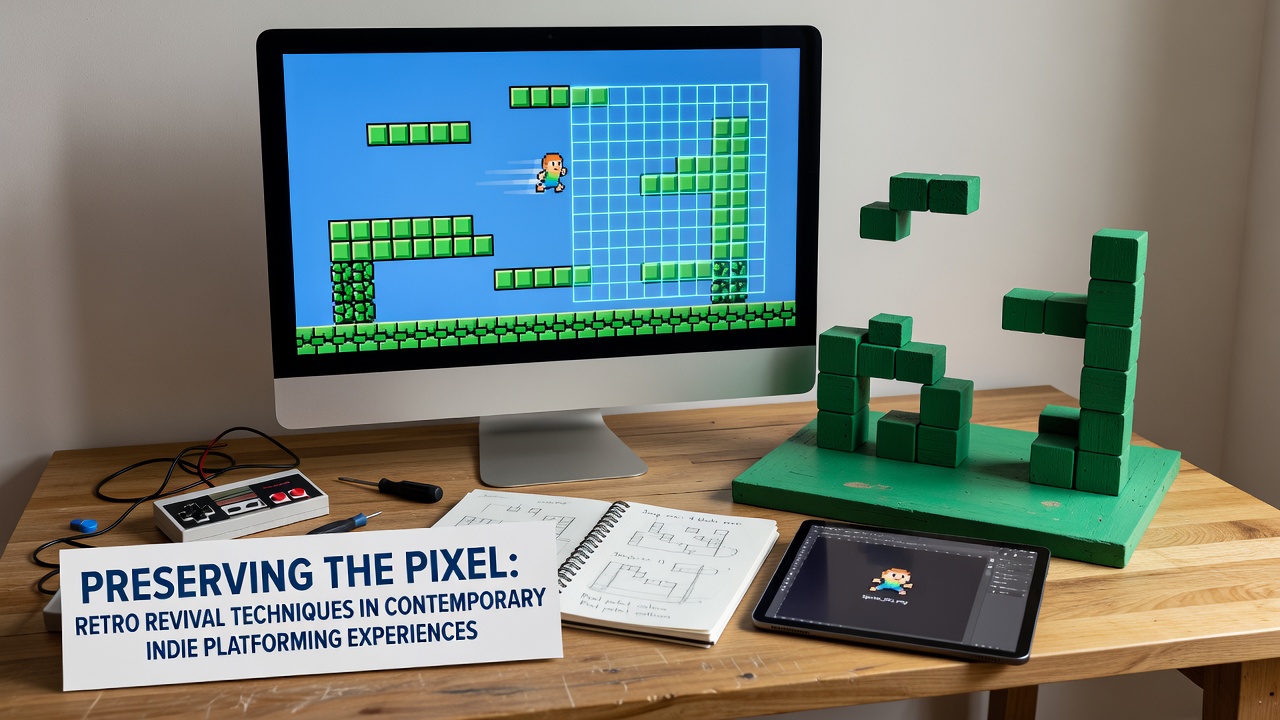
September 2026 saw several such projects debut at independent game showcases across Europe and North America, with developers sharing source code repositories that detail how they preserved sub-pixel movement calculations while adding modern accessibility toggles for colorblind modes and input remapping. These updates maintain the original movement feel yet expand reach to broader audiences without altering core physics simulations.
Community and Preservation Efforts
Archival groups have documented the rise of these techniques through public databases that catalog exact palette values and tile sizes used in current releases. Figures from the Entertainment Software Association reveal that preservation-focused indie platformers generated over 120 million player hours across digital storefronts in the first half of 2026, reflecting sustained interest in mechanics that prioritize precision over graphical fidelity upgrades.
Developers sometimes release development tools alongside their games, enabling others to apply the same sprite alignment scripts and shader presets to new projects. This practice creates shared libraries that reduce the time required to achieve authentic retro rendering while avoiding common pitfalls such as texture bleeding during screen transitions.
Future Directions
Emerging hardware like handheld devices with variable refresh rates now supports these revival methods through updated drivers that maintain pixel integrity across dynamic display modes. Observers note that cross-platform releases increasingly rely on resolution-independent asset pipelines, which preserve the original pixel grid during porting to systems with different aspect ratios.
Academic collaborations have produced papers examining how these techniques influence level design patterns, particularly in games that blend hand-crafted stages with algorithmic generation. The data suggests that strict adherence to pixel boundaries encourages tighter enemy placement and movement scripting, resulting in replay loops that reward frame-accurate execution.
Conclusion
Indie platforming continues to serve as a testing ground for methods that balance historical accuracy with contemporary distribution needs, and ongoing work in shader development alongside community tool sharing supports this balance across new titles. These practices ensure that the core visual and mechanical language of earlier eras remains accessible while adapting to evolving hardware landscapes.